Yakitori is one of the purest expressions of cooking over charcoal. Simple ingredients, precise heat and careful timing combine to create skewers that are deeply savoury, lightly charred and full of flavour.
Traditionally cooked over binchotan charcoal on a konro grill, yakitori focuses on balance. Each skewer is cooked quickly over high heat, then turned and basted to build layers of flavour.
What is Yakitori?
Yakitori refers to Japanese skewered chicken, although the technique is now used for a wide variety of ingredients.
Classic yakitori includes:
• chicken thigh
• chicken breast
• chicken skin
• wings
• vegetables such as spring onion
Each skewer is cooked over charcoal and seasoned either with salt or a rich tare glaze.
Why a Konro Grill is Ideal for Yakitori
Yakitori relies on intense, focused heat.
A narrow charcoal grill allows skewers to sit close to the heat, cooking quickly while developing a light char.
The Grill Box Konro Grill is perfectly suited to this style of cooking, producing high radiant heat across a concentrated cooking area.
Binchotan vs Lump Charcoal Explained Choosing the Right Charcoal for Fire Cooking When cooking over charcoal, the type of fuel you use has a direct impact on heat, flavour and control. Two of the most commonly used options are binchotan charcoal and lumpwood charcoal. Both have distinct characteristics, and understanding the difference between them can [...]
How to Cook a Leg of Lamb on a Robata Grill Slow Cooking Over Fire with the Robata Method Cooking a leg of lamb over fire is one of the most rewarding ways to use a live fire grill. With the robata method, the process becomes slower, more controlled, and deeply flavourful, allowing the meat [...]
What is a Konro Grill? A Guide to Japanese Charcoal Grilling Cooking over charcoal is one of the oldest and most flavourful ways to prepare food. In Japan, one of the most distinctive tools used for this style of cooking is the konro grill. Konro grills are compact charcoal grills designed to produce intense radiant [...]
Robata vs Konro Grills Understanding Japanese Charcoal Grilling Styles Japanese charcoal cooking is admired around the world for its precision, flavour and simplicity. Two terms that often appear when discussing Japanese grilling are robata grilling and konro grilling. Although the two are closely related and often used together, they refer to slightly different grilling styles [...]


The Grill Box Fire Cooking Guide – Yakitori Cooking Guide: How to Cook Skewers Over Charcoal
Yakitori Cooking Guide
How to Cook Skewers Over Charcoal
Yakitori is one of the purest expressions of cooking over charcoal. Simple ingredients, precise heat and careful timing combine to create skewers that are deeply savoury, lightly charred and full of flavour.
Traditionally cooked over binchotan charcoal on a konro grill, yakitori focuses on balance. Each skewer is cooked quickly over high heat, then turned and basted to build layers of flavour.
What is Yakitori?
Yakitori refers to Japanese skewered chicken, although the technique is now used for a wide variety of ingredients.
Classic yakitori includes:
• chicken thigh
• chicken breast
• chicken skin
• wings
• vegetables such as spring onion
Each skewer is cooked over charcoal and seasoned either with salt or a rich tare glaze.
Why a Konro Grill is Ideal for Yakitori
Yakitori relies on intense, focused heat.
A narrow charcoal grill allows skewers to sit close to the heat, cooking quickly while developing a light char.
The Grill Box Konro Grill is perfectly suited to this style of cooking, producing high radiant heat across a concentrated cooking area.
👉 Explore the Grill Box Konro Grill
This setup allows skewers to cook evenly while maintaining moisture and flavour.
Choosing Your Skewers
Flat metal skewers or soaked bamboo skewers both work well.
Flat skewers are often preferred because:
• they prevent ingredients from spinning
• they allow even cooking
• they are reusable
Bamboo skewers should be soaked in water for at least 30 minutes before cooking.
Preparing Yakitori
Cut ingredients into uniform pieces to ensure even cooking.
Thread onto skewers with small gaps between pieces to allow heat to circulate.
Simple Yakitori Seasoning Options
Salt (Shio)
• sea salt
• light seasoning to highlight natural flavour
Tare Sauce
• soy sauce
• mirin
• sake
• sugar
Brush during cooking to build layers of flavour.
Setting Up the Fire
Yakitori requires a hot, steady charcoal bed.
You are aiming for:
• high heat
• glowing embers
• minimal flame
The controlled firebox of the Grill Box Konro Grill makes it easy to maintain consistent cooking conditions.
Cooking Yakitori
Place skewers directly above the charcoal.
Stage 1 — Initial Sear
• place skewers over high heat
• allow light charring
• do not move too quickly
Stage 2 — Turn and Control
• turn regularly
• manage flare ups
• adjust position if needed
Stage 3 — Build Flavour
• brush with tare
• allow glaze to caramelise
• repeat for depth of flavour
Using a Robata Setup for Yakitori
For greater control, especially when cooking multiple skewers, a raised cooking structure can be helpful.
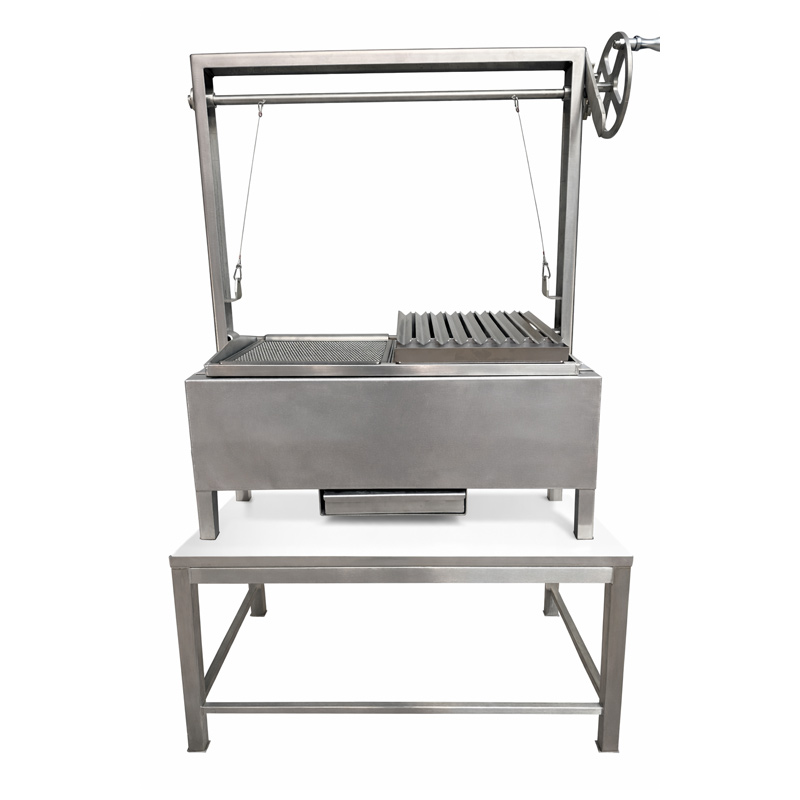
The Grill Box Robata Frame allows skewers to be positioned at different heights above the charcoal.
Explore the Grill Box Robata Frame
This makes it easier to:
• control cooking speed
• manage different ingredients
• avoid burning
Expanding Your Skewer Cooking Setup
The Skewer Frame allows multiple skewers to cook evenly across the grill.
This is particularly useful when cooking for groups or preparing multiple ingredients at once.
Tips for Perfect Yakitori
• keep pieces evenly sized
• avoid overcrowding skewers
• control flare ups carefully
• turn frequently
• build flavour gradually
Yakitori is about precision rather than speed.
Why Yakitori Works So Well Over Charcoal
Cooking over charcoal creates a unique flavour profile.
• light smokiness
• caramelisation from fat
• crisp exterior with juicy interior
This combination is difficult to achieve with other cooking methods.
Build Your Grill Box Fire Cooking Setup
To cook yakitori at home with precision and control, a modular setup offers flexibility.
Start with the Grill Box Konro Grill
Add the Robata Frame for multi level control
Introduce the Asado Frame for larger fire cooking setups
Related Posts
The Grill Box Fire Cooking Guide – Binchotan vs Lump Charcoal Explained
The Grill Box Fire Cooking Guide – How to Cook a Leg of Lamb on a Robata Grill
The Grill Box Fire Cooking Guide – What is a Konro Grill
The Grill Box Fire Cooking Guide – Robata vs Konro Grills